LOADING
Next.js Portfolio - Modern Web Developer Showcase
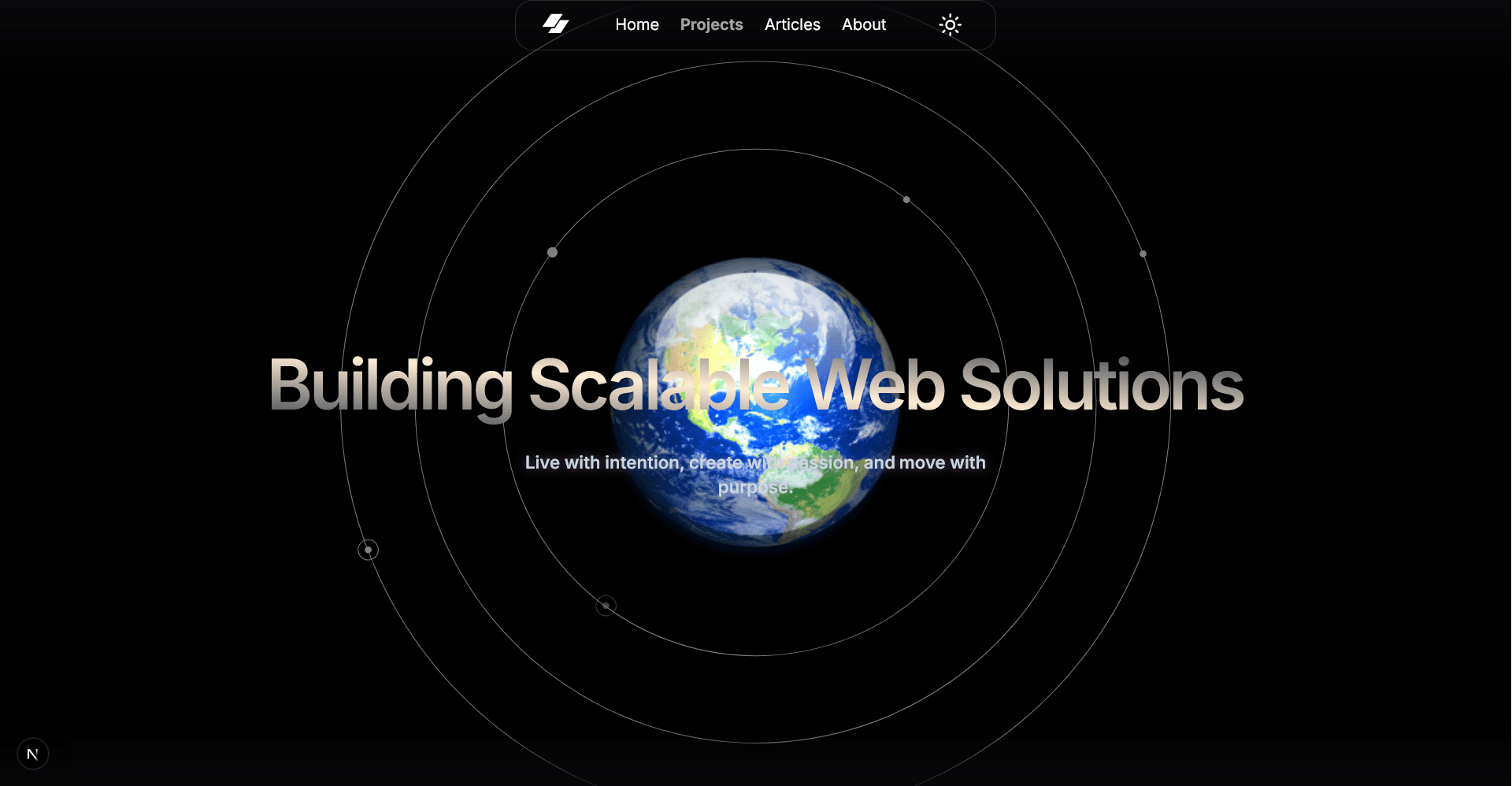
Proves understanding of modern web practices—from server-side rendering and SEO to performance optimization and accessible design.
Next.jsSSRSEOPerformanceTypeScriptResponsive DesignAccessibilityModern Web Standards


NextJs

React

Tailwind

TypeScript

Html

CSS
The Core Vision
🎨
Platform Features
Server-side rendered homepage with optimized performance
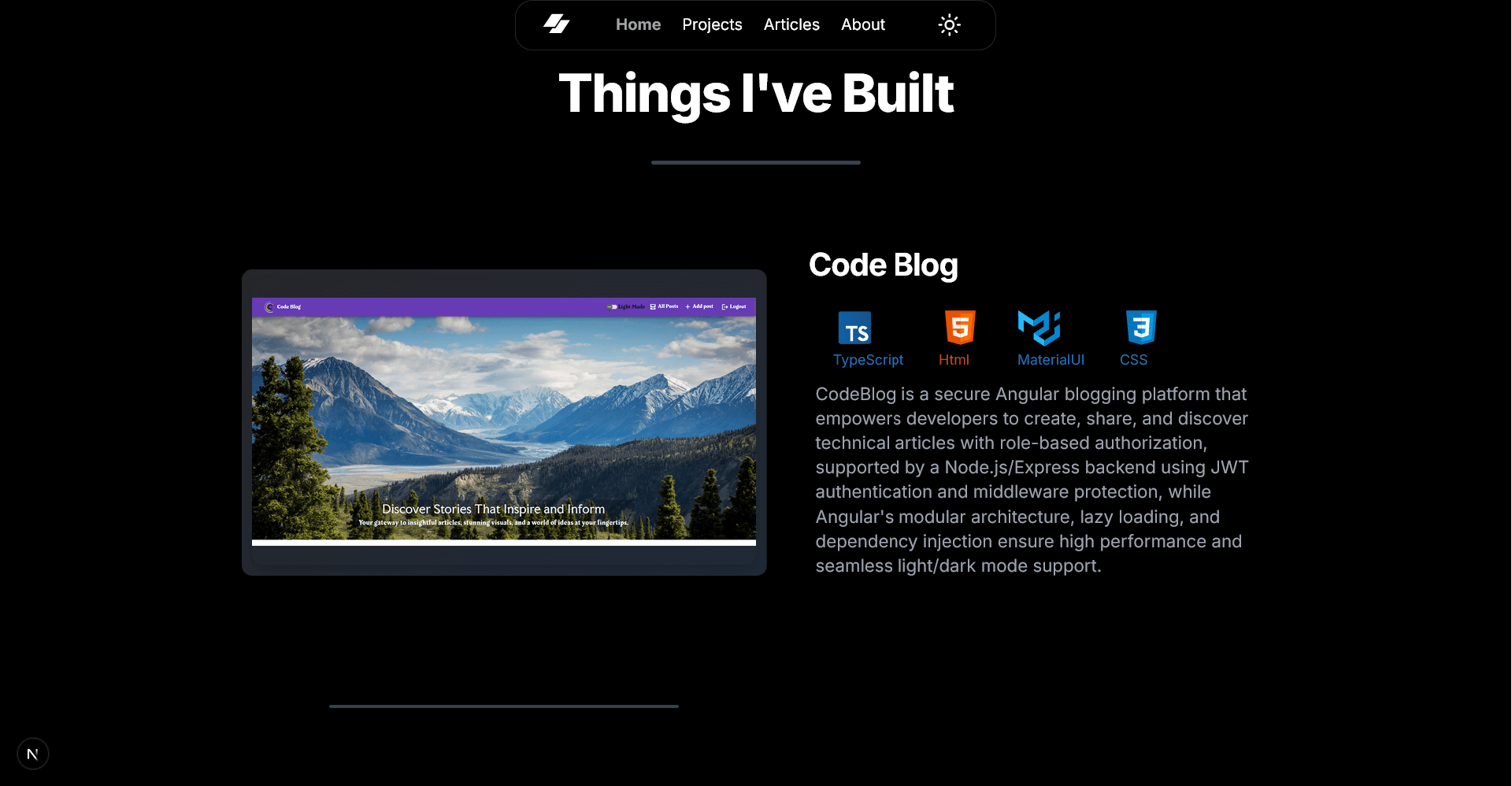
Dynamic project pages with individual metadata and SEO
Blog section with dynamic routing
Responsive design for all devices
Dark/Light mode toggle with persistence
Semantic HTML and accessibility best practices
Image optimization and lazy loading
Fast navigation with Next.js client-side routing
⚡Deep Dive
SSR & Dynamic Architecture
The Challenge
!
Scalability
Adding projects without full rebuilds.
!
SEO
Unique metadata for every dynamic route.
!
Performance
Balancing server rendering with fast navigation.
Technical Architecture
Implemented using modern Next.js 15 patterns:
🛠️
Server Components
For data fetching and rendering
Dynamic routes
With [slug] for infinite scalability
Pre-rendering
generateStaticParams() for pre-rendering key routes
SEO
generateMetadata() for per-page SEO optimization
Images
Image optimization with next/image
Styling
CSS with Tailwind for maintainability
Type Safety
TypeScript for type safety throughout
Separated concerns using MVC-inspired architecture with lib/ for models (data), components/ for views, and pages/ for controllers.
Critical Challenges
The Problem
Managing SSR with dynamic content while keeping pages fast
The Fix
Used generateStaticParams for pre-rendering and fallback rendering for new content
The Problem
Structuring a scalable folder hierarchy for growing portfolio
The Fix
Implemented domain-based folder separation and MVC-inspired logic separation
The Problem
Ensuring each dynamic page has unique SEO metadata
The Fix
Created custom metadata.js in each route with generateMetadata() function
The Problem
Organizing reusable components without creating maintenance burden
The Fix
Created ui/ folder for atomic components and shared/ folder for layout components
API Documentation
RESTful Resources
| Method | Endpoint | Description | Auth |
|---|---|---|---|
| GET | /api/projects | Get all portfolio projects | Public |
| GET | /api/projects/:id | Get project details by ID | Public |
| GET | /api/articles | Get all articles/blog posts | Public |
| GET | /api/articles/:slug | Get article by slug | Public |
Quick Start
terminal — node setup
$ cd portfolio && npm install && npm run devReflections & Impact
🎓
Technical Growth
- •SSR vs CSR: Deepened knowledge of when to render on server (content) vs client (interactivity).
- •Next.js Internals: Mastered dynamic routing, ISR, and middleware.
- •Real SEO: Learned that semantic HTML and meta tags matter more than "magic" optimizations.
- •TypeScript ROI: Type safety drastically reduced bugs during refactors.
🧠
Soft Skills
- •Iterative Design: A portfolio is never 'done'; it evolves with your skills.
- •Design = Credibility: A polished UI implies polished code to non-technical viewers.
🚀
The Aftermath
Set the template for all my future web projects: think SEO/Performance first, use TypeScript, and maintain strict MVC-like separation in folder structures.
Current StatusLive, actively maintained, and evolving. Serves as both a marketing tool and a testing ground for new Next.js features.